Apartheid
Before Israel
For 1,270 years under Islamic rule, Jews in their own homeland lived under a codified system of legal subordination. Nobody calls it apartheid. But it was.
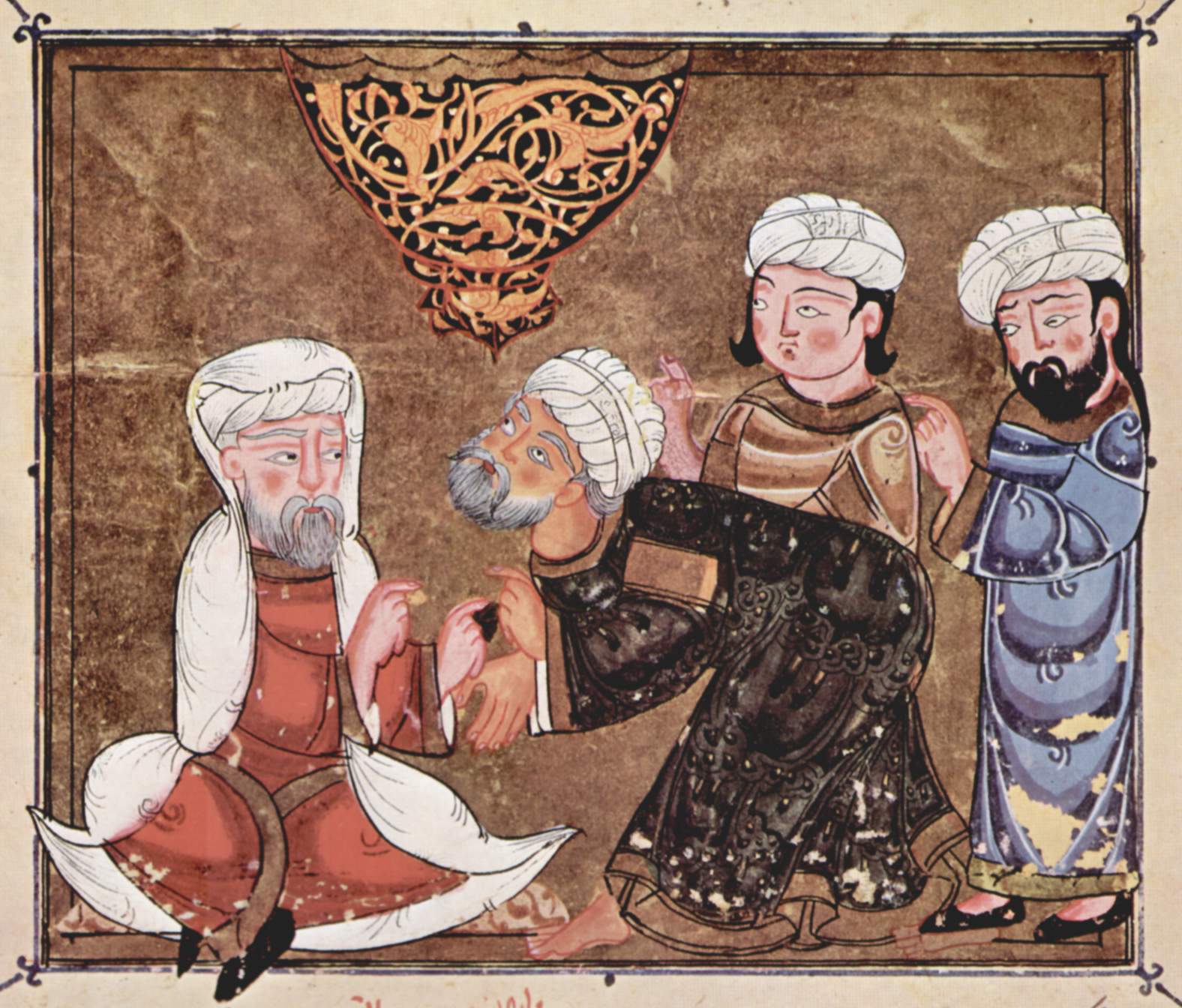
From Maqamat of al-Hariri, 1334
For 1,270 years under Islamic rule, Jews in their own homeland lived under a codified system of legal subordination. Nobody calls it apartheid. But it was.
We often hear that Jews and Muslims lived in harmony before Zionism. And they did in many ways, especially compared with two millennia of European violence. But it was more the status quo of apartheid than any form of equality.
Jews were classed as dhimmi — a tolerated minority under Muslim rule, protected but never equal. The repression wasn’t always violent. But the subjugation was structural, and it lasted over a thousand years.
The word apartheid has a legal definition, codified in a 1973 UN Convention. It names eleven specific conditions that, taken together, constitute a crime against humanity. Apply those conditions to the system Jews lived under for 1,270 years, and eight of the eleven are met.
| UN Apartheid Convention Criterion | Met Under Islamic Rule |
|---|---|
| (a)(i) Murder of members of the group | Recurring state-sanctioned expulsions; massacres of Jewish quarters |
| (a)(ii) Serious harm; cruel or degrading treatment | Mandatory marking garments; corporal punishment for non-payment of jizya; public subservience required |
| (b) Living conditions calculated to cause physical destruction | Mass expulsions to uninhabitable terrain; punishing jizya levels; prohibition on building or repairing synagogues |
| (c) Denial of political and cultural life | Barred from government office; inadmissible as witnesses against Muslims; forbidden arms and horses |
| (c) Denial of freedom of movement and residence | Mandated Jewish quarters, locked at night; public deference required |
| (c) Denial of freedom of expression | Shofar prohibited in public; criticism of Islam punishable by death |
| (d) Creation of separate reserves and ghettos | Mandated residential separation across Muslim-ruled lands; the mellah system |
| (d) Expropriation of property | Jizya as permanent wealth extraction; expulsion-era property seized; Temple Mount access restricted |
Three Convention criteria — arbitrary imprisonment, forced labor, and formal persecution of organized dissent — were not systematic features of the dhimmi system. Other methods of control were. Forced conversion of Jewish adults, forced conversion of Jewish orphans, and periodic mob violence against Jewish communities were used across the Muslim world for centuries.
These rules varied by time and place — but the underlying message was consistent: Jews were allowed to survive, not to thrive.
Despite these prohibitions, Jews attempted to thrive in their homeland. And when they became too powerful or inconvenient, they were crushed.
“Settler colonial regimes are structurally prone to genocide, and may indulge in ‘genocidal moments’ when they become frustrated by the resistance of a colonized or occupied people.”
Center for Constitutional Rights, The Genocide of the Palestinian People, 2016
The centuries of Islamic rule in Palestine produced numerous episodes of targeted violence against Jewish communities — events that today we would call ethnic cleansings or genocidal acts, but which are largely absent from the modern historical conversation.
| Event | Date | Location | Details |
|---|---|---|---|
| Fatimid Repression & Expulsion | 1009–1015 | Jerusalem | Holy sites and synagogues destroyed; Jews forcibly converted then expelled from Jerusalem |
| Seljuk Anarchy and Mass Violence | 1070s–1090s | Palestine-wide | Murder, captivity, pillage, arson, destruction of holy sites; Jewish letters from Palestine largely stop after 1078 |
| Khwarazmian Sack of Jerusalem | 1244 | Jerusalem | Christians massacred; Jews “driven out” |
| Safed & Hebron Pogroms | 1517 | Safed & Hebron | Looting, rape, murder during Ottoman conquest |
| Destruction of Safed & Tiberias | 1660 | Safed & Tiberias | Synagogues and homes destroyed by Druze and Arab forces; communities dispersed |
| Expulsion from Jerusalem | 1720 | Jerusalem | Synagogue burned over debt; Ashkenazi Jews banned from the city for 100 years |
| Safed Pogrom | 1838 | Safed | 33 days of violence. 500 Jews murdered, uncounted rapes, synagogues looted. Less than 10% of possessions recovered |
| Ottoman Expulsions | 1914–1917 | Palestine-wide | 19,000 Jews expelled in waves. 1,500 died or were murdered in transit, their possessions stolen |
Selected events, 1009–1917. These episodes are largely absent from the modern historical conversation about Jewish–Arab relations.
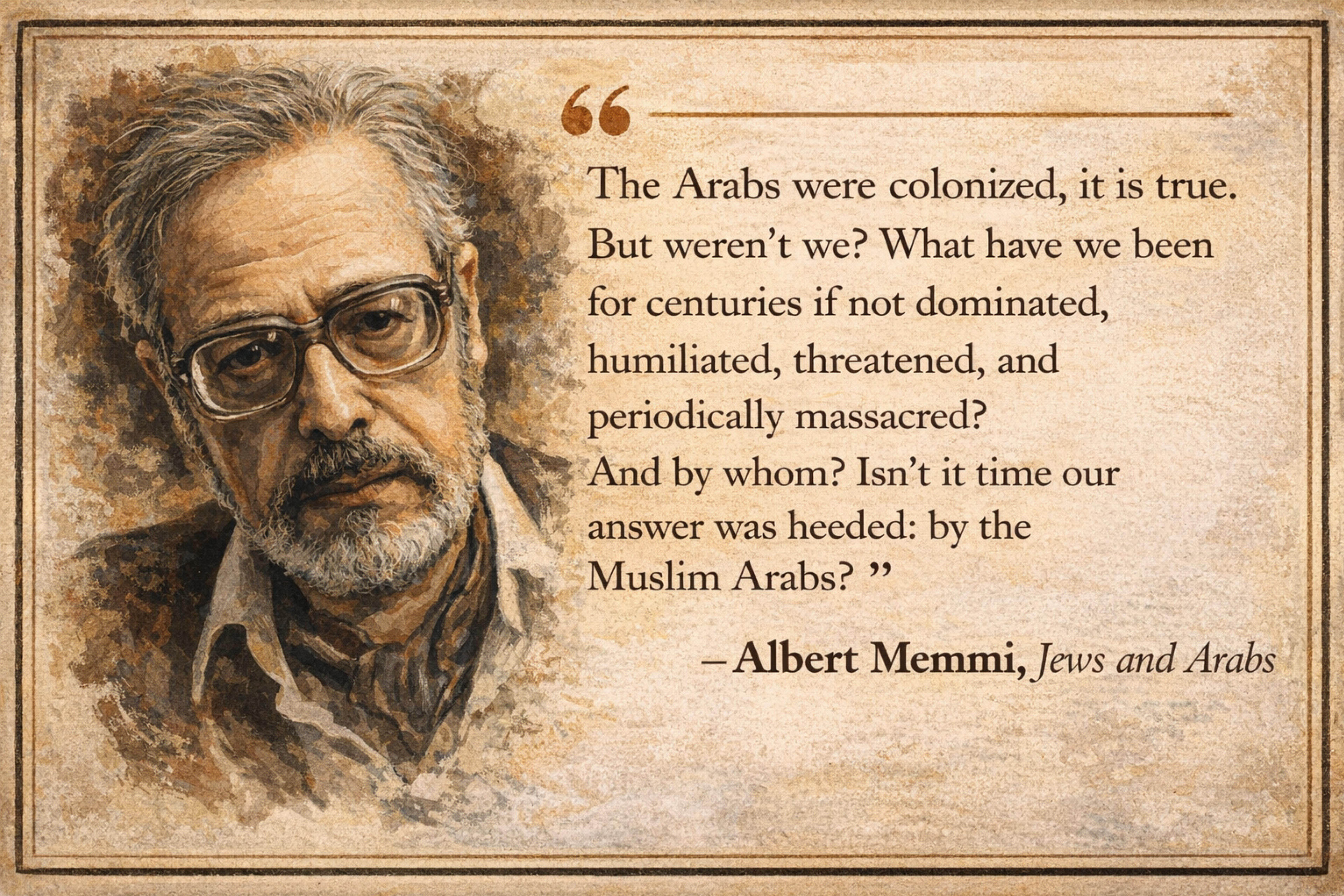
The typical antizionist story is that Jews were victims elsewhere and then made victims in Palestine.
But Jews were also victims in Palestine. And when you can see that, you can start to see how Zionism’s insistence on Jewish sovereignty was a reaction to that — not an export of European violence, but a response to Middle Eastern history in its own right.
This history isn’t intended to justify Israel’s military regime in the West Bank. Many consider it an occupation, and a military occupation that becomes permanent becomes indistinguishable from apartheid.
But the word apartheid isn’t a description of the situation in the West Bank — it’s a prescription. If you say apartheid, the prescription is for one state. If you say occupation, the prescription is for two states.